
If your doctor has prescribed semaglutide, your first question is probably simple: how much do I take, and when does the dose go up? This guide walks you through the semaglutide weight loss dosage chart for Wegovy, explains the semaglutide starting dose for weight loss, and shows what to expect at every step, from your first 0.25 mg injection to your long-term maintenance dose. Our pharmacists at Consult Rx Pharmacy in Fort Lauderdale answer these questions every week, so we have also added practical tips for missed doses and side effects.
What Is Semaglutide?
Semaglutide is a prescription medicine that copies a natural gut hormone called GLP-1 (glucagon-like peptide-1). After you eat, GLP-1 tells your brain you are full, slows how quickly your stomach empties and helps your body release insulin. By strengthening this signal, semaglutide helps many people feel satisfied with smaller portions and lose weight over time, when it is used together with a reduced-calorie diet and more physical activity.
For weight loss, semaglutide is most often taken once a week as an injection under the skin of the stomach, thigh or upper arm. A once-daily tablet is also available. Because the medicine stays in your body for about a week, the dose is raised slowly to give your digestive system time to adjust.
Wegovy VS Ozempic: Which One Is for Weight Loss?
Wegovy and Ozempic contain the same active ingredient, but the FDA has approved them for different uses. Wegovy is approved for long-term weight management in adults with obesity, or adults who are overweight with at least one weight-related health condition. It is also approved to lower the risk of heart attack and stroke in adults with heart disease and excess weight. Ozempic is approved for adults with type 2 diabetes to help control blood sugar.
The pens and dose steps are different, so the ozempic vs wegovy dose question matters. Never switch from one pen to the other without new instructions from your prescriber.
Semaglutide Weight Loss Dosage Chart
The table below shows the standard wegovy dose schedule from the FDA prescribing information for the weekly injection. Each step lasts four weeks, and most adults reach their maintenance dose by week 17.
Month-by-Month Dose Table
| Month | Weeks | Weekly dose | What this step is for |
|---|---|---|---|
| Month 1 | 1–4 | 0.25 mg | Starting dose; lets your body adjust |
| Month 2 | 5–8 | 0.5 mg | First dose increase |
| Month 3 | 9–12 | 1 mg | Building toward an effective dose |
| Month 4 | 13–16 | 1.7 mg | Last step before maintenance |
| Month 5 | 17+ | 2.4 mg (or 1.7 mg) | Long-term maintenance dose |
Wegovy HD (7.2 mg): In March 2026 the FDA approved a higher 7.2 mg weekly dose for adults who have tolerated 2.4 mg for at least four weeks and need more weight loss. It is never a starting dose.
Wegovy tablets: The Wegovy pill, approved in December 2025, has its own schedule: 1.5 mg once a day for 30 days, then 4 mg, 9 mg and 25 mg, increasing every 30 days. Take it on an empty stomach with a small sip of water, then wait 30 minutes before eating, drinking or taking other medicines.
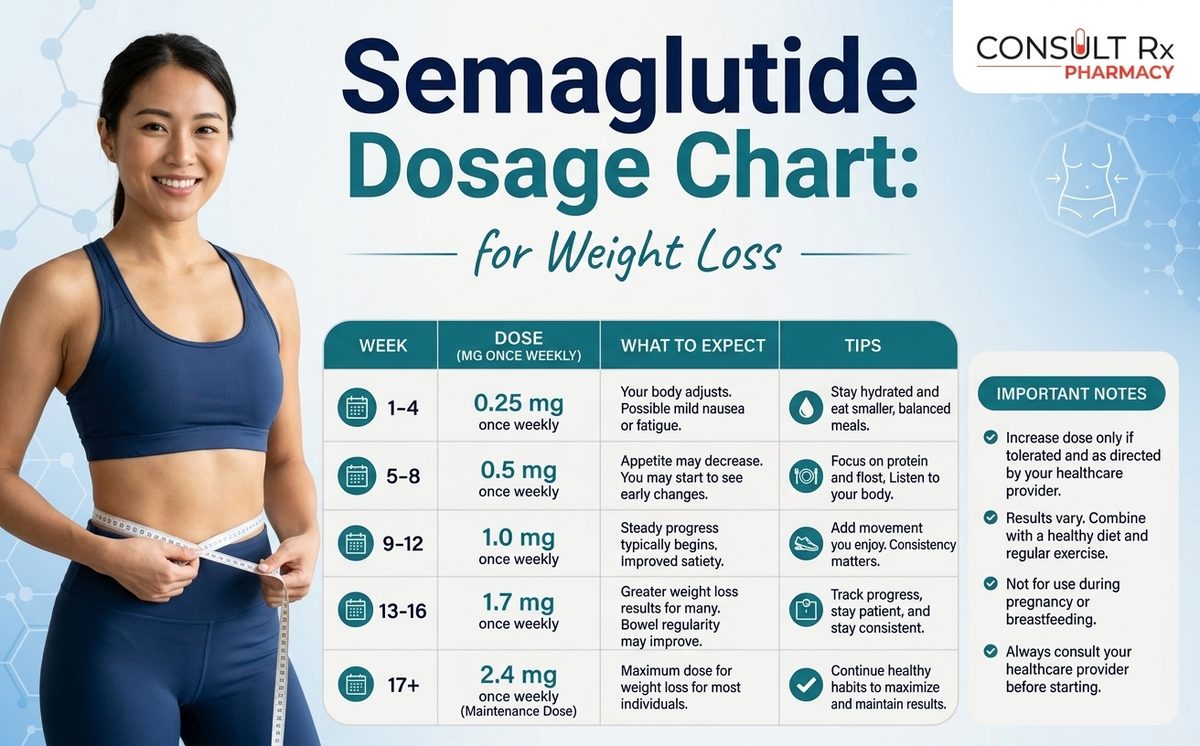
Keep a copy of this semaglutide weight loss dosage chart on your phone or fridge, and write down the date of each injection. It makes refills, check-ups and questions much easier.
Semaglutide Starting Dose for Weight Loss
For the weekly injection, the semaglutide starting dose for weight loss is 0.25 mg once a week for four weeks. At this level you may not lose much weight; its job is to let your stomach get used to the medicine. Pick one day of the week for your shot and keep it the same, and set a phone reminder. You can inject at any time of day, with or without food, and rotate between the stomach, thigh and upper arm.
Why the Starting Dose Is So Low
Semaglutide slows how fast food leaves your stomach. Starting at a high dose would make nausea, vomiting and stomach pain much more likely. Starting low and going slow lowers that risk, and many people already notice a smaller appetite in the first month. Do not judge the medicine by month one; meaningful weight change usually comes once you reach the higher doses.
How and When Your Dose Increases
Your prescriber normally raises the dose every four weeks, following the chart above. This step-by-step semaglutide dose increase helps you reach an effective dose while keeping side effects manageable. Before each step in your semaglutide dose increase schedule, check two things: are you eating and drinking normally, and are your side effects mild and improving? If both answers are yes, you are usually ready for the next strength. Start a new pen strength only when your prescriber has sent the new prescription.
What If You Cannot Tolerate the Next Dose?
Needing more time is common. The Wegovy label allows your prescriber to delay the next increase by four weeks if a dose is hard to tolerate. Some people stay on 1.7 mg as their long-term dose if 2.4 mg causes too many side effects. Never cut, split or “micro-dose” pens to make your own schedule; talk to your prescriber or pharmacist instead.
Maintenance Dose: What to Expect Long Term
Most adults stay on 2.4 mg once a week, with 1.7 mg as an option based on results and tolerability. Semaglutide is meant for long-term use. In clinical studies, many people who stopped the medicine regained weight, so plan with your prescriber how long you will stay on treatment. Regular check-ins on your weight, blood pressure, blood sugar and side effects help keep you on track.
Side Effects at Each Dose Stage
The most common semaglutide side effects by dose are stomach-related: nausea, diarrhea, vomiting, constipation, stomach pain, headache and tiredness. They are most likely in the first days after you start and after each dose increase, and they usually ease within a few weeks.
- 0.25–0.5 mg: mild nausea, feeling full quickly, smaller appetite.
- 1–1.7 mg: stomach symptoms can return for a few days after each increase; constipation becomes more common.
- 2.4 mg and above: most people have adjusted. At 7.2 mg, skin sensitivity or tingling was reported more often in studies.
Call your doctor right away if you have severe stomach pain that does not go away (possible pancreatitis), pain in the upper right belly or yellow skin (possible gallbladder problems), a lump or swelling in your neck, signs of a serious allergic reaction, or vomiting so severe you cannot keep fluids down.

Tips to Reduce Nausea
- Eat smaller meals and stop as soon as you feel full.
- Choose bland, lower-fat foods; limit greasy, fried and very sweet foods.
- Sip water through the day to stay hydrated, especially in the South Florida heat.
- Eat slowly and avoid lying down right after a meal.
- Ask your pharmacist about safe over-the-counter options for constipation or heartburn.
Who Should Not Take Semaglutide
Semaglutide is not right for everyone. Do not use it if you or a family member have had medullary thyroid cancer (MTC), if you have Multiple Endocrine Neoplasia syndrome type 2 (MEN 2), or if you have had a serious allergic reaction to semaglutide. Stop it at least 2 months before a planned pregnancy. Tell your prescriber if you have had pancreatitis, gallbladder disease, kidney problems or diabetic eye disease, or if you take insulin or other diabetes medicines. Do not combine it with any other GLP-1 medicine.
Conclusion
Following the semaglutide weight loss dosage chart step by step, staying hydrated and reporting side effects early are the three habits that help people succeed on this medicine. If you are searching for semaglutide weight loss near me, our pharmacists can review your dose schedule, show you how to use your pen, check for interactions with your other medicines and help you plan refills. If a commercial product is not suitable for you, ask us whether compounded semaglutide for weight loss is an option; it is only prepared when your prescriber documents a specific medical need.
Frequently Asked Questions
What is the semaglutide starting dose for weight loss?
For Wegovy injection, you start with 0.25 mg once a week for four weeks. For Wegovy tablets, the first dose is 1.5 mg once a day for 30 days. The starting dose helps your body adjust and lowers the chance of stomach side effects; it is not expected to cause major weight loss yet.
How long do you stay on each semaglutide dose?
For the weekly injection, each step usually lasts four weeks; for tablets, each step lasts 30 days. If side effects are bothering you, your prescriber may keep you on the same dose for another four weeks before moving up. Going slower is safe and common.
Can I skip a dose step to lose weight faster?
No. Skipping steps raises the risk of nausea, vomiting and dehydration and does not make the medicine work safely any faster. Follow the wegovy dose schedule your prescriber gives you, and ask before making any change.
What happens if I miss my weekly semaglutide dose?
If your next Wegovy dose is more than 48 hours away, take the missed dose as soon as you remember. If it is less than 48 hours away, skip it and continue on your usual day. If you miss two or more doses in a row, call your prescriber before restarting.
Is the semaglutide dose for weight loss the same as for diabetes?
No. Ozempic for type 2 diabetes starts at 0.25 mg, moves to 0.5 mg, and can be raised to 1 mg and a maximum of 2 mg weekly. Wegovy for weight loss goes up to 2.4 mg, or 7.2 mg with Wegovy HD. The pens are not interchangeable.